Making Maths Matter: Our Practical Approach
Every maths teacher has heard this question more times than they can count: “Why do we have to learn maths?” Over the years, the usual answers have started to feel increasingly inadequate. In a thought-provoking Medium article, this question is addressed directly, exposing both the common justifications we give students and their limitations.
Traditionally, teachers say that maths is vital for many careers. Yet, when students honestly reflect, their immediate associations are often limited to certain professions. This reveals a significant gap: many students find it hard to see how advanced mathematics genuinely applies to their future lives.
Another common answer stresses how maths builds critical thinking and problem-solving skills (the famous ‘gym for thought muscle’ answer). However, in reality, many maths lessons become repetitive calculation drills, disconnected from real problem-solving contexts. As the article rightly notes, without applying maths meaningfully to real-life situations, students struggle to connect abstract mathematical ideas with tangible results.
Rethinking Maths Education: How ARCSA Makes Maths Meaningful
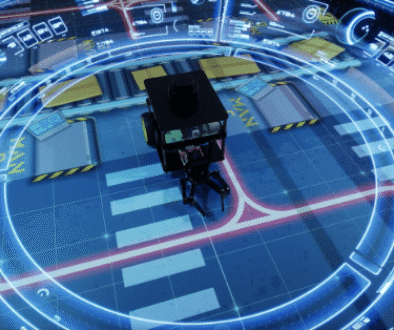
At ARCSA, we’ve carefully considered these issues, and our teaching methods directly tackle these concerns. Our beginner students work with simple mathematical ideas through practical, hands-on robotics challenges developed by Carnegie Mellon University. Instead of isolated arithmetic exercises, they measure distances, convert measurements, calculate angles, and use proportions—all within real-world contexts that naturally demonstrate maths’ importance.
For advanced students in our Artificial Intelligence and Robotics (AIR) Course, mathematics becomes the vital tool it was always meant to be. Our students apply trigonometry and geometry directly to Computer Vision projects, experiencing how abstract concepts translate into practical outcomes. They also use linear algebra (vectors and matrices), calculus, statistics and probability for projects involving ROS2 robotics programming and Natural Language Processing (NLP).
Beyond Calculations: Teaching Real-World Maths at ARCSA
This approach aligns with the article’s advice: shift from teaching calculation-heavy, abstract maths toward practical, problem-oriented learning. ARCSA doesn’t just teach maths; we embed maths into real projects, helping students develop not only calculation skills but genuine analytical thinking.
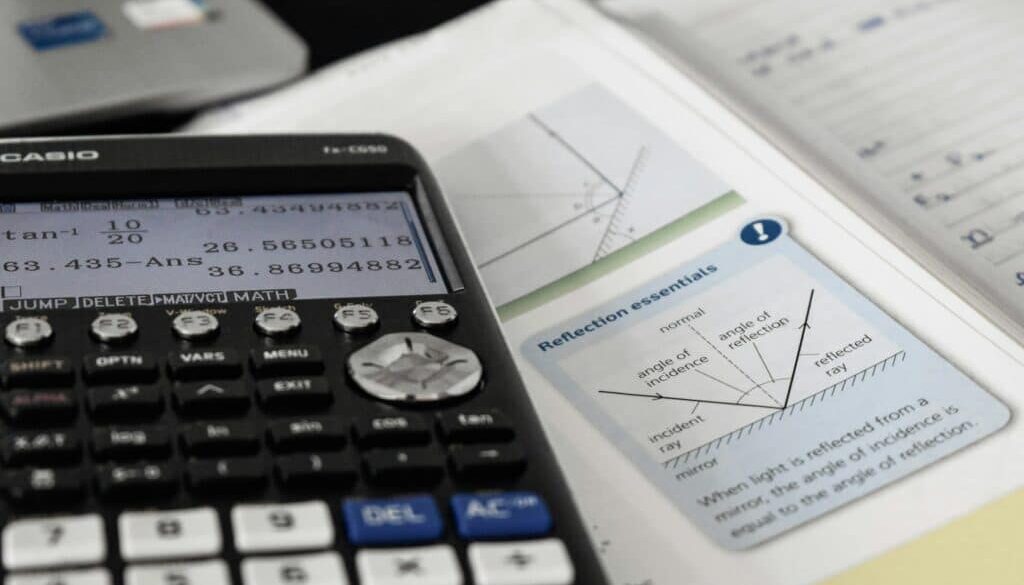
The article recommends embracing technological tools such as calculators, software, and AI to support advanced calculations, enabling students to focus on interpreting and solving real-world problems. ARCSA fully supports this idea, already placing technology and real-world relevance at the centre of our curriculum.
We believe it’s time for mathematics education to evolve. Maths isn’t just about numbers—it’s about reasoning, understanding relationships, and applying knowledge in meaningful ways. ARCSA is dedicated to preparing students not just for exams but for life, shaping future innovators and engaged citizens who see mathematics as a powerful tool to influence the world.
For further reading, check out the original Medium article: Why Do We Have to Learn Math?