Why Intuition, Imagination and Emotion Will Outlast AI And Why We Teach Them at ARCSA
Artificial intelligence is moving fast. It can already outperform humans at many tasks that are routine, repetitive, or purely analytical. But according to Angus Fletcher — neuroscientist and author of Primal Intelligence — some of our deepest capacities are likely to endure far beyond any machine: intuition, imagination, and emotion.
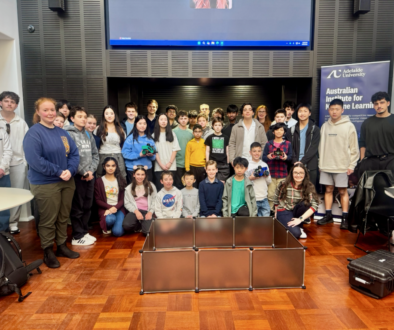
At ARCSA, where we teach robotics and coding to students aged 8–18, this message resonates strongly. Our curriculum isn’t only about programming robots or flying drones. It’s also about cultivating the uniquely human abilities that technology can’t easily replicate.
Brains Aren’t Computers
Fletcher argues that it’s a mistake to think of the human brain as a computer. Machines excel at categorising and calculating. People excel at story: weaving meaning out of complexity, navigating ambiguity, imagining futures.
That is why, even when our students are writing Python code for LEGO Mindstorms EV3 robots or programming DJI Tello drones, we emphasise project-based learning. Each project tells a story: What problem are you solving? Who benefits? How could it be improved? This narrative framing helps students think like designers, not just coders.
Surprise and Serendipity
AI folds anomalies into its models. Humans see anomalies as opportunities — the “happy accident” that sparks innovation. In our robotics sessions, a miswired sensor or a drone that drifts off course isn’t a failure; it’s a chance to hypothesise, debug, and maybe invent something new.
That’s why we design our courses so that students must confront the unexpected. When they do, they’re practising exactly the skill Fletcher highlights: turning noise into a spark for invention.
Valuing Difference Over Conformity
Fletcher warns that institutions often reward efficiency and suppress the irregular. At ARCSA we consciously protect curiosity and difference. Our scholarship program — unique in Adelaide — is designed to bring in students who might not otherwise get access to STEM. They bring new perspectives, different questions, and often the most creative ideas in the room.
Intuition as Sensitivity to Exceptions
Children naturally spot the exception to the rule. Adults lose that ability as training pushes them toward generalisation. One of our favourite classroom moments is when a 10-year-old notices something odd in the code or the robot’s behaviour that everyone else missed. We make a point of celebrating that observation. It builds confidence in their intuitive “radar” and shows that noticing is as important as knowing.
Emotion Is Not a Distraction
Craft links the hand, the eye, and the heart. Emotion signals what matters; it’s part of judgement, not a flaw in it. In our drone sessions, when a student’s design finally works, the smile on their face isn’t just a feel-good moment — it’s an indicator of deep engagement. Those emotional peaks and troughs are what cement real learning.
Playing the Long Game
Fletcher emphasises apprenticeship, patience, and a multi-generational view of progress. This aligns with how we structure our programs. A student might start with our Robotics Course at age 8, move into Computer Science, take part in the LaunchBox satellite program, and by 16 be programming TurtleBot 4 robots with ROS2. Each step builds on the last, integrating successes, failures, hopes, and context across time.
AI as Tool, Not Replacement
The takeaway isn’t to reject AI but to use it wisely. Machines can handle patterns and computation. Humans bring the story, empathy, and leap into the unknown. At ARCSA we already teach students how to harness AI for good — using it to analyse data, generate ideas, or debug code — while reminding them that their imagination and judgement are still the real superpowers.
Our edge as humans — and as educators — is not just teaching technology but teaching how to think with it.
By cultivating intuition, imagination, and emotion alongside technical skill, we’re preparing our students for a future where AI is everywhere, but humanity’s unique capacities are more valuable than ever.