Future-Proof Your Career: Why Embodied AI and Robotics Outpace Software Engineering
The Commoditization of Pure Software Engineering
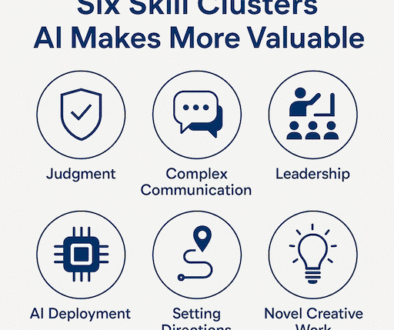
The rapid advancement of generative AI is fundamentally restructuring the technological workforce. Tools powered by sophisticated AI agents are democratizing access to software creation, shifting the primary function of a software engineer from a “code producer” to a “code curator”.
With AI generating up to 90% of the codebase in some frontier environments and accelerating task completion by 55%, the pure act of writing software is rapidly becoming commoditised. Up to 30% of current software engineering tasks—specifically repetitive implementation—are expected to be fully automatable by 2030.
The Unyielding Moats of Physical Robotics
While digital syntax is increasingly vulnerable to automation, the physical world presents formidable barriers that protect careers in Embodied AI and robotics. These “moats” include:
- The Cognitive & Physical Moat (Moravec’s Paradox): High-level logical reasoning is mathematically trivial for modern AI, but low-level sensorimotor skills, like folding a deformable piece of fabric or clearing a messy dining table, require enormous computational resources that are currently unsolved.
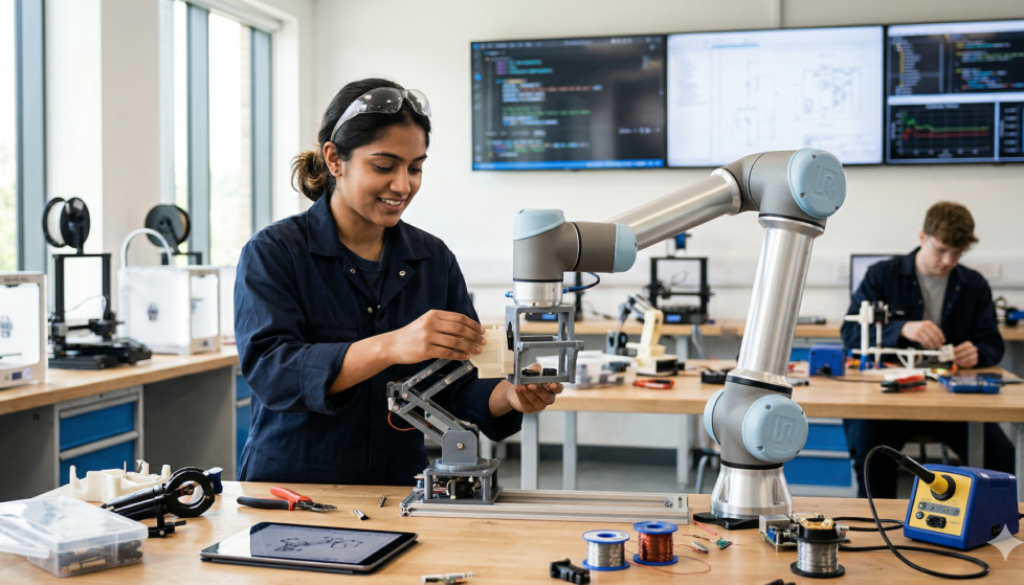
- The Sim-to-Real Gap: Simulators cannot perfectly capture the chaotic complexity of the real world, such as micro-frictions, sensor noise, and subtle material deformations. Algorithms trained in simulation frequently fail in the physical world, requiring human engineers to manually bridge the gap. This is exactly why, by using the BotBox Robotics Lab, ARCSA emphasises our “Real Tools, Real Understanding” approach over purely screen-based programming.
- Deterministic Constraints & Entropy: Unlike software, physical robots degrade dynamically over time through gear backlash and friction. Controlling heavy, high-voltage machinery requires deterministic, millisecond-level precision using classical control theory, rather than the probabilistic “guessing” of large language models.
- Regulation and Liability: Stringent life-safety standards (such as ISO 26262) and emerging legal liability frameworks require strict oversight of human engineering. Autonomous systems require traceable, deterministic safety filters to prevent catastrophic physical harm.
The Future is Collaborative (and Lucrative)
Labour market projections heavily favour those who interface with physical systems. The World Economic Forum projects the creation of 170 million new roles globally driven by AI by 2030, led by automation developers and robotics engineers. Furthermore, professionals who can bridge the gap between theoretical AI models and real-world production environments currently command substantial salary premiums, with senior robotics roles exceeding $200,000 in major markets.
Ultimately, the future isn’t about robots precipitating mass unemployment; it’s about collaborative ecosystems where humans supply creativity, interdisciplinary strategy, and ethical judgment, while robots provide precision and execution.
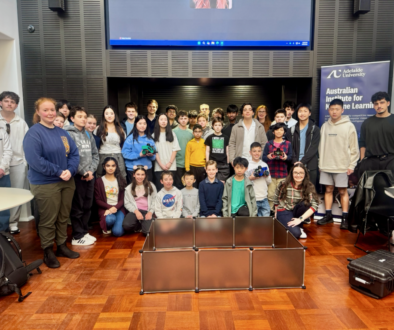
To prepare the next generation for this reality, ARCSA introduced the Artificial Intelligence and Robotics (AIR) Program. Designed for high school students, AIR alternates between advanced robotics using ROS 2 and deep AI projects. Acquiring competencies in multi-modal sensors, control theory, and hardware-software integration is the ultimate career imperative, providing total structural immunity to the wave of generative AI disruption.