
Why Kids Still Need to Learn to Code in the Age of AI
Even with AI tools in every toolbox, young people still need the thinking, judgment, and creative agency that come from learning to program. Coding is not just typing syntax; it is how learners build the mental models that make them effective problem solvers, careful critics of AI output, and confident creators in a digital world.
Why the Human Element Remains Non-Negotiable
1. Humans Must Remain the Architects: AI assistants can generate code at lightning speed, but they cannot replace the deep work of framing problems, designing architectures, and making ethical choices. Skilled programmers know what “good” looks like. They can read, refactor, and judge when an AI suggestion is unsafe, inefficient, or hallucinated.
2. Coding is How You Learn to Think: Real fluency comes from the friction of writing, reading, testing, and debugging. That deliberate practice builds durable mental models of logic, data flow, and algorithmic thinking. Natural-language “vibe-coding” skips the struggle where true understanding is forged.
3. AI Expands Opportunity, It Doesn’t Shrink It: Historically, whenever technology lowers the cost of building software, the demand for software explodes. AI will change workflows, but it will also create entirely new domains—from health and agriculture to the arts—where computational thinking is essential. Learners who can speak the machine’s language will find more doors open to them, not fewer.
4. Code is Modern Literacy and Agency: In a society run by black-box models and algorithms, students need the ability to question the system: What data went in? What are the assumptions? What are the trade-offs? Knowing how code works turns “magic” into explainable tools, giving young people a voice and control over their digital environment.
5. The Creators Shape the Future If fewer kids learn to program, a smaller, less representative elite will decide how technology works for the rest of us. Broad participation in coding leads to better, fairer products and more inclusive outcomes for everyone.
How ARCSA Teaches in the AI Era
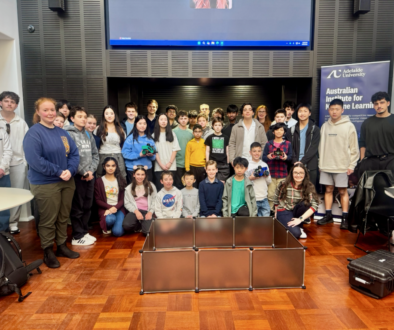
At the Adelaide Robotics and Computer Science Academy, we don’t ignore AI; we train the pilots who will command it.
- Write First, Then Wield AI Wisely: Students learn to design and implement solutions manually before using AI assistants to brainstorm or critique. We teach them to verify and simplify AI output, never just copy and paste.
- Hands-on, Real-World Projects: From animations and games to robots and sensors, our learners apply loops, conditionals, and algorithms to tangible problems. This is how deep understanding sticks.
- Cross-Curricular Thinking: We model scientific systems, analyse text at scale, and work with real datasets. Coding becomes a lens to explore the world.
- Ethics and Safety by Design: Students discuss bias, privacy, and reliability. We teach that good engineering always includes good judgment.
Where This Fits in Our Programs
- Robotics Course: A structured, project-based pathway where students learn core programming concepts by controlling real hardware and debugging physical behaviour.
- Artificial Intelligence and Robotics (AIR) Course: An evolving curriculum that grows with your child, continuously adding modern topics and challenges to keep them at the cutting edge.
The goal isn’t just code; it’s judgment, creativity, and clarity of thought. If you want your child to be a confident creator rather than a passive consumer, coding remains the most reliable path.
Enrol them with ARCSA today. Let’s build the mental models that will serve them for life.